Unitsolver Building System converts building intent into manufacturable structure and production-ready data.
What USBS delivers
A steel-based modular framework system designed for scalable factory production and fast on-site assembly.
Concrete frames are slow, expensive, and carbon-intensive
In Europe, rising costs and outdated methods have pushed housing production back to 2015 levels, while housing shortages exceed 10 million homes. The industry lacks a scalable, industrial alternative.
Fragmented delivery
10–14 days per floor, manual handovers between disciplines with no shared structural logic
Non-deterministic outcomes
Weather sensitivity, rework, and delays from interpretation-dependent processes
No industrial repeatability
High labor dependency — when the system is not computable, scaling is a people problem
USBS — An algorithmic building system
Our solution, Unitsolver Building System (USBS), is a patent-pending steel-based modular building framework system designed for scalable factory production and fast on-site assembly.
Through a unique 'prompt-to-production' engine, we leverage AI to instantly transform building requirements into optimized, manufacture-ready designs, slashing pre-construction lead times by months.
USBS enables rapid, scalable and cost-efficient construction of frames for mid-rise residential buildings, student housing and hotels.
Deterministic
Same input, same output. Structure encoded as rules and parameters, not drawings.
Manufacturable
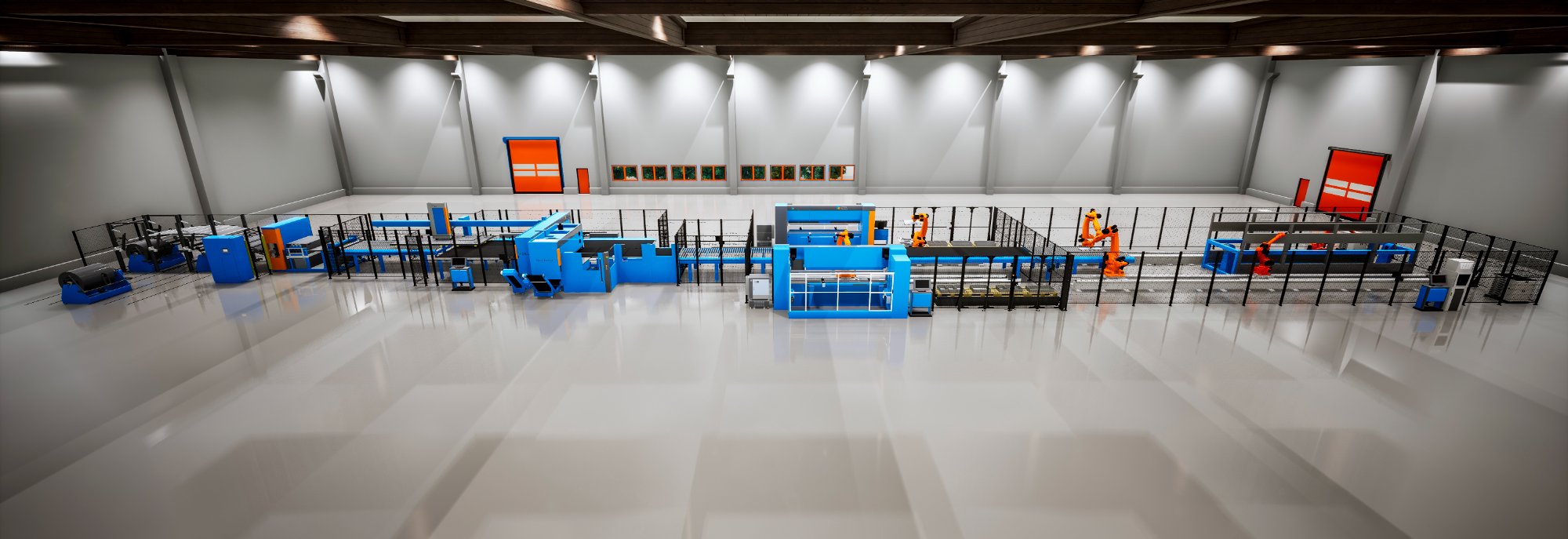
Steel coil to finished modules. A 20–30 m² module produced in approximately 1.5 hours.
Factory-compatible
Based on state-of-the-art machinery from partners such as Prima Power. 75,000 m² annual capacity per factory.
AI-augmented
Prompt-to-production workflow. AI interprets intent, deterministic core guarantees structural validity.
Geometry → Rules → Production
A building must be producible as data. AI cannot be the authority on structure — it operates around a deterministic core.
Input
- Building geometry
- Parameters & constraints
Processing
- Structural rules
- Manufacturing decisions
Output
- Structural layout
- BOM & production data
Validation before expansion
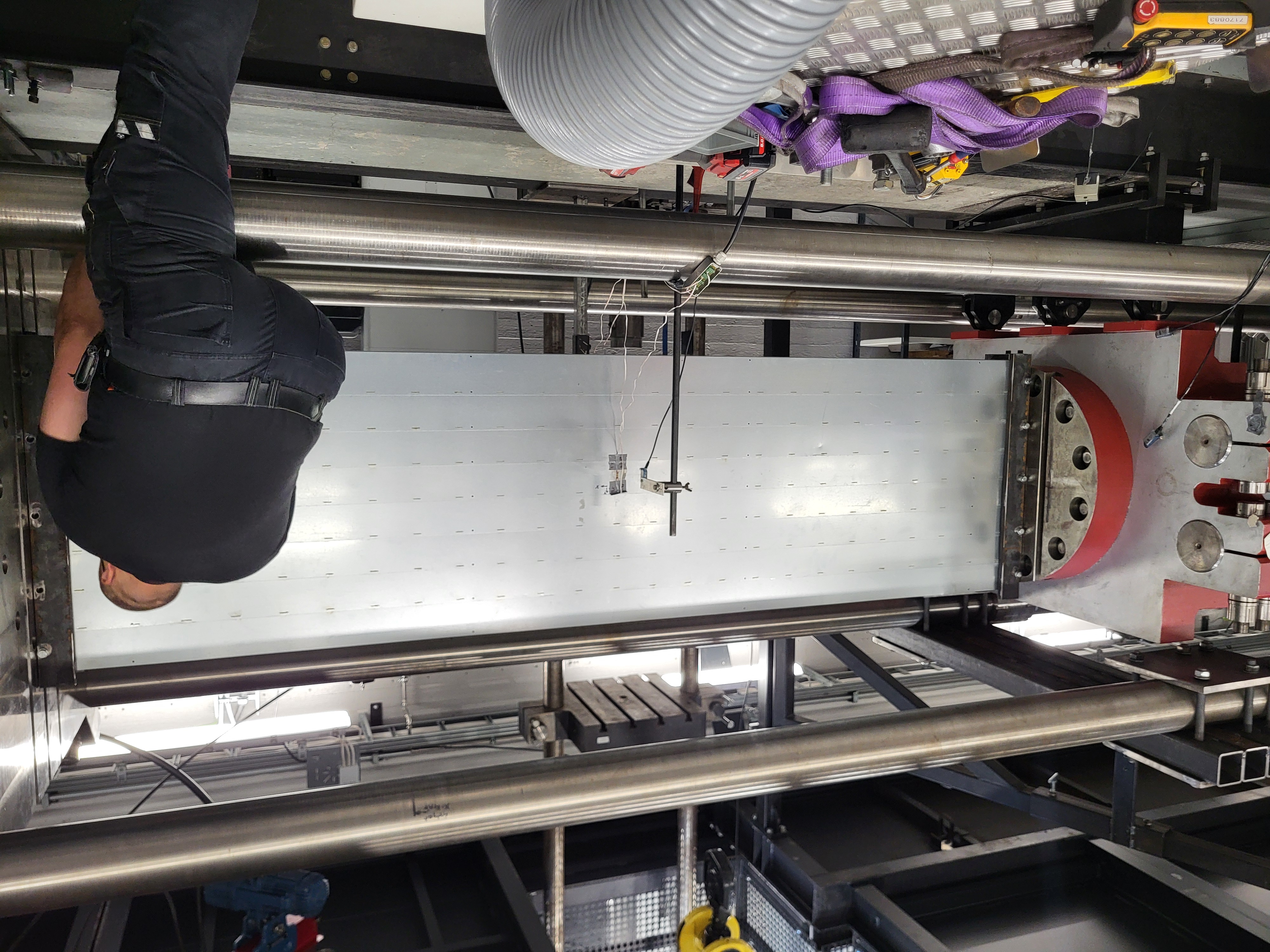
Structural testing — LUT University
Eurocode-compliant design. FEM-modelled 6-storey building verified. Compression tests confirm calculated load capacity.
Fire safety — A1 non-combustible
Tested to EN 12467. USBS fire plate system achieves up to R90–R120 fire resistance (configuration-dependent).
End-to-end dataflow
Deterministic pipeline from parameters to machine-ready DXF output. No manual steps, full traceability.
Industrial collaboration — Prima Power
Factory concept based on state-of-the-art machinery. Production logic and manufacturing constraints integrated.
Building industrial capability?
If you evaluate technology by evidence rather than promises — explore the system, request the technical deck, or partner for an industrial pilot.